art activism

NATALIE HEGERT /MUTUALART FEBRUARY 22, 2017 Share
SUPERFLEX, Hospital Equipment, 2014. Courtesy the artists. Photo: PalMedSuperflex.

In this heated political climate, art for art’s sake feels ever more like an indefensible position—maybe a guilty pleasure. Even within the relative privilege of the art establishment, activist ideals are increasingly surfacing, while political statements made by artists have become de rigeur. Just this week, 200 prominent contemporary artists, curators, writers, musicians, and filmmakers have announced the formation of a global coalition to combat the rise of “right-wing populism, fascism and the increasingly stark expressions of xenophobia, racism, sexism, homophobia and unapologetic intolerance” with art exhibitions, actions, and programming. Defiantly titled “Hands Off Our Revolution,” signers-on include the likes of Alfredo Jaar, Okwui Enwezor, David Byrne, Hank Willis Thomas, Rosalind Krauss, Tacita Dean, Wilhelm Sasnal, Pierre Huyghe, Martha Rosler, and Miranda July. The perennial question faced by such artist-activists is whether or not the activities performed in the rarefied world of the art exhibition and symposium can truly make an impact in the so-called “real world.” To investigate this question, we take a look at recent activist actions by international artists and current exhibitions that aim to effect material change in the world.

Cedrick Tamasala, Untitled, 2016, ink and graphite on paper, 39.4 x 27.6 inches (100 x 70 cm). Courtesy the Cercle d’Art des Travailleurs de Plantation Congolaise; Galerie Fons Welters, Amsterdam; and KOW, Berlin.

The truth is that there is a huge range of what constitutes activist art actions, from those operating on the level of individual interaction, to broad-based efforts focused on practical goals, like fundraising, or more intangible ones, like awareness-raising. The effectiveness of these actions likewise varies greatly. Recently, Anish Kapoor, upon receiving the $1 million Genesis Prize, announced that the prize money would go toward helping refugees, a constituency the artist has worked, and walked, for in the past. Mark Bradford, who co-founded an art non-profit for foster children in his local community in Los Angeles, recently reported that his participation in the upcoming Venice Biennale would include an initiative supporting the rehabilitation of local female ex-convicts. On the other hand, Christo’s surprise abandonment of his and Jeanne-Claude’s long-fought-for Over the River project under the vague auspices of anti-Trumpism probably amounted to no more than a mere blip on the radar of its target. All of these artists hold high profiles in the art world, and their decisions invariably attracted much media attention, but the objective and impact of their actions fall on a wide spectrum.

Tomorrow Girls Troop, Girl Power Café, 2017. Installation view, Socially Engaged Art, 3331 Arts Chiyoda, Tokyo, 2017. Photo: Tomorrow Girls Troop.

Most artists, however, don’t have the benefit of a high profile name or art event like the Venice Biennale to enact change in their communities. Some must even use the protection of anonymity to challenge the status quo. Feminist art collective Tomorrow Girls Troop, founded in 2015, wear pink bunny masks, à la the Guerrilla Girls, to deliver their message of gender equality to young people in Japan, Korea, and beyond. Promoting feminism in a hostile patriarchal system necessitates the use of the masks, to protect against the often violent threat of backlash; the veil of anonymity empowers the Tomorrow Girls Troop to spread their message without fear. While much of their activity takes place on the internet and social media channels, their most recent action saw them marching in unison in front of the Japanese Diet building, part of an extended campaign to raise awareness of sexual violence and Japan’s outdated laws regarding rape. A video and artifacts of the Tomorrow Girls Troop’s Believe march are on display, along with a Girl Power Café serving up feminist library books and discussion of gender issues, in the exhibition Socially Engaged Art: A New Wave of Art for Social Change at 3331 Arts Chiyoda, in Tokyo.

Pedro Reyes, Guns for Shovels, 2008 -. Installation view, Socially Engaged Art, 3331 Arts Chiyoda, Tokyo, 2017. Photo: Haruhiko Muda.

Socially Engaged Art, on view until March 5, is the first exhibition to feature social practice art in Japan, with international artists like Ai Weiwei, Suzanne Lacy, and Pedro Reyes, shown alongside Japanese artists Yoshinari Nishio, Kazuya Takagawa, Kurumi Wakaki, and projects and collectives like Park Fiction and Mammalian Diving Reflex. Like other exhibitions of socially engaged art, the tension between the aesthetic object and the activist aim is evident in many of the works. A line of 10 identical shovels, part of Pedro Reyes’s Guns for Shovels project (2008 – ), perhaps is the work that deals best with the problem of representing social change through art objects. Reyes’s shovels were forged from the metal extracted from surrendered firearms. The shovels then are used to plant olive trees—embodying a literal transformation from a violent weapon to a tool for planting a symbol of peace.

SUPERFLEX, Hospital Equipment, 2014. Courtesy the artists. Photo: Anders Sune Berg.

The shovel has a precedent in art history, of course: Marcel Duchamp’s famous ready-made sculpture In Advance of the Broken Arm (1964). Rather than serve as a functional object, the ready-made retreats into the realm of art, and therefore into the realm of the useless—completely the opposite of the socially engaged art under discussion here. Danish art collective SUPERFLEX, however, explores the idea of a ready-made art object that is life saving rather than utterly useless, “a ready-made, upside down,” as they term it. In Hospital Equipment (2014 – ), now showing at Galerie von Bartha, the art object consists of a collection of vital instruments and surgical tools. After the exhibition closes, the art object becomes simply its own photographic documentation, while the actual tools will be shipped out to be made useful in a hospital environment, where they are crucially necessary—specifically, to the Salamieh Hospital in Hawarti, Syria.

Installation view, Cercle d’Art des Travailleurs de Plantation Congolaise, SculptureCenter, New York, 2017. Photo: Kyle Knodell.

A project that purports to make art useful begs the question, however: does it even need to be art to begin with? Consider another exhibition, on view now at SculptureCenter in New York, which places art at the center of its program of social change. The Cercle d’Art des Travailleurs de Plantation Congolaise (Congolese Plantation Workers Art League or CATPC) is a collective of Congo-based sculptors who use art as a vehicle to create wealth and opportunity in an area suffering from the aftermath of colonial exploitation. While palm oil and cacao farmers in the Congo are still paid a pittance for the raw materials they produce, the CATPC divert those same materials into their sculptures, sold on the art market, thereby “occupy[ing] another place in the global value chain.” In turn, the CATPC shine a light on the systems and structures that continue to disproportionately benefit from exploitative labor and the remains of colonial rule, particularly corporations that also have a large stake in the art world, such as Unilever (a sponsor of the Tate Turbine Hall commissions). In collaboration with Dutch artist Renzo Martens’ project Institute for Human Activities, the CATPC will be opening a research center and white cube art space in their native Lusanga, Congo, formerly the site of a Unilever plantation and known in the past as “Leverville.” Martens commented, “I feel that there’s so much inequality in this world I can’t just make politically critical art and show it in places of power.” With the site about as far away from the traditional centers of the art world as you can get, the project truly tests the limits of art’s impact in the real world.

Jérémie Mabiala reflecting on his work, 2015. Courtesy the Cercle d’Art des Travailleurs de Plantation Congolaise.

Socially Engaged Art: A New Wave of Art for Social Change is on view at 3331 Arts Chiyoda, in Tokyo, from February 18 to March 5, 2017.

SUPERFLEX: Hospital Equipment is showing at Galerie von Bartha, S-chanf, from February 17 to March 18, 2017.

Cercle d’Art des Travailleurs de Plantation Congolaise (Congolese Plantation Workers Art League) are showing at New York’s SculptureCenter from January 29 to March 27, 2017.

—Natalie Hegert
Global Art Coalition Forms to Confront Rising Populist Right BY NICHOLAS FORREST | FEBRUARY 17, 2017

Global Art Coalition Forms to Confront Rising Populist Right
BY NICHOLAS FORREST | FEBRUARY 17, 2017

Global Art Coalition Forms to Confront Rising Populist Right
Hands off our revolution
RELATED

ARTISTS
Anish Kapoor

Edward Ruscha

The recent proliferation of artist-led activism has continued to gain momentum with the launch of a new movement that aims to counter what is described in its mission statement as “the rising rhetoric of right-wing populism, fascism and the increasingly stark expressions of xenophobia, racism, sexism, homophobia and unapologetic intolerance.”
More than 200 artists, musicians, writers, and art professionals from around the world have pledged their support for the “Hands Off Our Revolution” coalition, which calls itself “a global coalition affirming the radical nature of art.” Supporters include the likes of John Akomfrah, Yto Barrada, Sophie Calle, Tacita Dean, Isaac Julien, Anish Kapoor, William Kentridge, and Ed Ruscha, to name a few

The primary form of action will be a series of contemporary art exhibitions, actions, and events presented in both central art institutions and alternative spaces around the world, the first of which will be announced in March. The exhibitions and events will shine the spotlight on statements, questions, and reflections on the current state of affairs.

Commenting on the formation of the coalition, Anish Kapoor said: “We artists are united in our mission to counter small minded prejudice. Our art affirms our humanity and we insist on inclusion of all and for all. We call for action by people of good conscience to stand against the abhorrent policies of the governments that claim to represent us.”

“We live in challenging times, to do nothing is to be complicit with intolerance and cruelty. We must all unite, regardless of race, gender or sexual orientation, to oppose all forms of bigotry. Populism must never be a guide to our conduct, empathy should be our guide. As artists we bear witness and we must never be silent or be silenced,” said Yinka Shonibare.

For more info visit the website here

culture as a release for our ‘brexit feelings’

Caitlin Moran on desert island discs said if we had had more artists like ‘common people by ?  maybe we would not have brexited. cos that is what culture should be – a release for our brexit feelings


Now I am reading into this that our brexit feelings are those which belong in the unconscious and are totally self seeking and murderousand that culture can somehow deal with those feelings (disarm them) and allow rational and humane behaviour

survival value? 1

http://www.bbc.co.uk/programmes/b08b7t20

The infinite monkey cage talking about games of chance and gambling

talking about game playing (Schillers spielraum) being crucial to discoveries in mathematics Euler tried to solve th Koenigsberg ? puzzle and produced graph theory and

‘He made an abstraction of what was going on for each side of a bridge that was a node and then there was like a line going from node to node and he made what looks now like a network and that has become an extraordinarily rich and vibrant field in graph theory mathematics and a lot of the stuff that is around now wouldn’t be around if it wasn’t for leonard euler’


this looks like visual art ‘looks like a network’ and abstraction drawn? drawing that moved into mathematics


graph theory – graphic = drawing

Even though Euler found the problem trivial, he was still intrigued by it. In a letter written the same year to Giovanni Marinoni, an Italian mathematician and engineer, Euler said [quoted in Hopkins, 2],

This question is so banal, but seemed to me worthy of attention in that [neither] geometry, nor algebra, nor even the art of counting was sufficient to solve it.


Euler believed this problem was related to a topic that Gottfried Wilhelm Leibniz had once discussed and longed to work with, something Leibniz referred to as geometria situs, or geometry of position. This so-called geometry of position is what is now called graph theory, which Euler introduces and utilizes while solving this famous problem.

geometria situs = geometry of position (pat fundamental to realistic painting./drawing)

the applications of graph theory are endless re so many things disease spread/transport theory/etcetc


the female speaker refers to maths as the ultimate playground


Taking on Trump: How to Prep for the Inauguration with Art

Inauguration with Art

BY MARGARET CARRIGAN | JANUARY 13, 2017

(/#FACEBOOK) (/#TWITTER) (/#PINTEREST)

Detail of Goya’s “The Sleep of Reason Produces Monsters” (1799). (Francisco Goya [Public domain], via Wikimedia Commons)

President-elect Donald Trump’s inauguration continues to near with alarming speed and increased absurdity, prompting numerous plans for protests, demonstrations, and exhibitions. Yet, despite the many calls to and opportunities for action, it’s hard not to feel powerless in the face of the escalating mischief and mayhem that surrounds the Trump administration’s takeover.

For instance, within the space of the last 48 hours of this article’s writing alone, we found ourselves back

in the Cold War era as a British spy went into hiding (http://www.dailymail.co.uk/news/article- 4113576/Former-MI6-spy-hiding-Russians-Trump-dirty-dossier-1million-two-years-working-undercover- supplying-FBI-information-cracked-open-corruption-FIFA.html) after Russia cited him as the culprit of a dirty dossier on the President-elect; Trump held his first news conference (https://www.washingtonpost.com/blogs/compost/wp/2017/01/11/what-the-bleep-happened-at-the-trump- news-conference/?utm_term=.8b93a478aa9f) in which he essentially said he doesn’t mind if his business

dealings may prove conflicts of interest while he is president and steadfastly will not release his tax returns (despite the fact that he demanded a birth certificate (https://www.washingtonpost.com/politics/trump-demanded- obamas-records-now-more-are-asking-where-are- trumps/2016/08/12/b536925a-5ff3-11e6-9d2f- b1a3564181a1_story.html?utm_term=.b4030f9da608) of Obama), all while humiliatingly shouting down members of the press while they tried to ask reasonable questions; and the Senate aggressively started dismantling the Affordable Care Act (https://www.nytimes.com/2017/01/12/us/politics/health- care-congress-vote-a-rama.html) by approving a budget blueprint that will strip millions of Americans of health care coverage and curtail free contraception for women.

This is just the start. The next four weeks, four months, four years will not be easy. Under our fearless and feckless new leader, Americans will continue to face a barrage of rhetoric and policy changes that may undermine our pursuits of life, liberty, and happiness. If we are to take up Obama’s charge he set us in

his farewell speech (http://www.cnn.com/2017/01/10/politics/president-obama-farewell-speech/) — to be our own agents of change — then our first order of business is to educate ourselves and visualize our resistance. This
is where art can play its role (http://www.slate.com/articles/arts/culturebox/2016/12/what_can_artists_do_to_oppose_donald_trump.html) as a tool for expression and galvanization.

Unfortunately, we can’t all provide an inspiring response waxing poetic on the power of creativity (https://medium.com/@deborahcullinan/on-saturday-november-5th-2016-before-the-world-got-so-much- darker-several-hundred-people-9a080d1c3f2#.4nyzvxkbr) to overcome the palpable gloom of misogyny, xenophobia, racism, and hyperbolism we’re finding ourselves in currently. As Artnet’s Ben Davis pointed out (https://news.artnet.com/art-world/art-must-admit-trump-lesson-764063) after Trump’s election, we must consider the limits of cultural activism, especially if we want to have a hope of using it effectively. Even more important to note is that we’re all exhausted: overworked and underpaid, pushed to our limits mentally, emotionally, and financially by the dysfunction of late capitalism. The flaccidness of any failed movement against Trump will not be due to lack of interest or creativity, only a dearth of energy.

Pragmatism isn’t as sexy as optimism or even anger. But it’s necessary because we have a long road ahead of us as Trump takes the reins of our nation. Perhaps the most important question right now is not “how can I make a difference,” for the enormity of such a vague query can overwhelm and lead to inaction. Instead, perhaps we should ask, “what can I feasibly commit to for the next week/ month/ year/ Presidential term/ etc.” Know your own limits and act accordingly because Trumpism is not a problem that will be solved by one march on Washington — we need humble, sustainable actions for the duration.

We have one week until Trump takes the Presidential oath after which he will lunch in front of a painting that represents a dark moment in American history (https://www.washingtonpost.com/entertainment/museums/donald-trump-will-eat-his-inaugural-lunch-in- front-of-an-image-of-slavery/2017/01/13/961a31e0-d76e-11e6-b8b2-cb5164beba6b_story.html? postshare=3321484327372802&tid=ss_tw&utm_term=.2cac700f91da): George Caleb Bingham’s “The Verdict of the People” (1855), which depicts public reaction to a likely proslavery candidate’s election victory. Many art institutions, in solidarity with the DisruptJ20 movement (http://www.disruptj20.org/get-organized/call-to- action/), will close their doors for Inauguration Day (http://hyperallergic.com/350191/j20-art-strike-ny- closings/). Until then, consider finding solace, sagacity, or solidarity in the following events and exhibitions included in the modest list below.

Anti-Trump Free School (https://www.eventbrite.com/e/anti-trump-free-school-escuelita-libre- anti-trump-tickets-30508243979)
January 14
Free University-NYC (http://freeuniversitynyc.org/) and Mayday Space (https://maydayspace.org/) have collaborated to present a day of workshops, teach-ins, and skill-shares with the aim of instructing participants how to effectively resist the recent intensification of xenophobia, hate crimes, endangered reproductive rights, white supremacy, attacks on workers, and environmental destructions that Trump’s election has bolstered.

Sessions include “Artivism: How to Use Your Talents to Protest,” “Visioning for Black Lives Under Trump,” and workshops on self-defense and protest health and safety, among others. Childcare, Spanish interpretation, and food by the Mayday Kitchen will be provided. The event is free, although a donation of $10-20 is suggested if feasible for the participant.

New-York Historical Society’s Presidency Project (https://www.nyhistory.org/presidency- project)
Now through Presidents’ Day Week
A museum-wide educational initiative to explore the role, powers, and responsibilities of the presidency, “The Presidency Project” offers a series of installations and educational programs that examine the US presidency since the nation’s beginning.

Special installations include “Messages for the President-elect,” which was inspired but the highly Instagrammed “Subway Therapy” (http://www.subwaytherapy.com/) project in Union Square. Visitors are invited to leave messages for Trump on sticky notes in the museum’s entryway on Central Park West; the notes will become a part of the N-YHS’s permanent collection, along with thousands of “Subway Therapy” notes. Additionally, artist Nari Ward (http://www.nariwardstudio.com/) will be on site creating a new work that spells out the preamble of the Constitution in shoelaces.

Nasty Women Exhibition at The Knockdown Center (http://nastywomenexhibition.org/) January 12-15
Generated from a Facebook post by curators Roxanne Jackson and Jessamyn Fiore, the exhibition includes some 700 artists who identify with being a Nasty Woman in the face of threats to roll back women’s rights, individual rights, and abortion rights. All works in the exhibition cost less than $!00 and 100% of the profits will

go to Planned Parenthood (https://secure.ppaction.org/site/Donation2;jsessionid=F82FDAB0BE5D87C47A34CA77A1E47D75.app20110a? 23923.donation=form1&df_id=23923&mfc_pref=T).

Uprise/Angry Women at The Untitled Space (http://untitled-space.com/uprise-angry-women- group-show/)
January 17-28
“Uprise/Angry Women” features the work of 80 female contemporary artists who are responding to the current social and political climate in America in light of the recent presidential election. On view January 17-22, it opens the week of the presidential inauguration and closes on the 44th anniversary of landmark case Roe vs Wade. The exhibit is presented in partnership with the ERA Coalition (http://www.eracoalition.org/), a political organization working to support passage and ratification of the Equal Rights Amendment, and a portion of proceeds will benefit their Fund for Women’s Equality.

Activist Artists Today at Galerie St. Etienne (http://www.gseart.com/)
January 18
Artists Mel Chin, Sue Coe, and Dread Scott, in conversation with moderator filmmaker Amei Wallach, will discuss the continuing tradition of activism pioneered by American artists in the 1930s, and how they use their work to inspire progressive political change. The panel discussion complements the current and timely exhibition on view at Galerie St. Etienne, “You Say You Want a Revolution: American Artists and the Communist Party,” (http://www.gseart.com/gse-pages/Current_Exhibition.php) on view through March 4.

art and politics: Dayanita Singh

http://www.bbc.co.uk/programmes/b088ddjs

From BBC RADIO 4 ‘Imagining the new truth’

The relevant part (for me) is that Dayanita Singh recalls her distaste for her job as a photojournalist. She says:

‘In my few years as a photojournalist, I realised that photography or art can’t change the world. I think it just doesn’t happen anymore. You know that was a different time, th time of Hiroshima when we didn’t see images. Now that is not the case.  But even when I was working as a photojournalist, I realised, very early on, especially because I was working with prostitutes, not just prostitutes but prostitutes children.  I couldn’t deal with being a photojournalist in these really dire situations in India that I couldn’t really change.   So I used to think I am actually no better than another pimp if I continue just photographing the children of the prostitutes,say. Either I become an activist If I care so much about these children, then I must become an activist. But I loved by that time photography more so I thought it is better to make family portraits till this became complicated. So then I started to make empty spaces  (cf Zoran Music and his post war landscapes).  And then I started to go to factories and then archives.’

Kant and the town hall flyer

30 Dec 2016

Kant: I will have to go back and refine/extend this idea but as I remember it briefly:

  • we feel we know what is good art
  • we feel others should agree
  • there are no expressible/true-false criteria on which we make these decisions

this is a very crude account of what Kant says

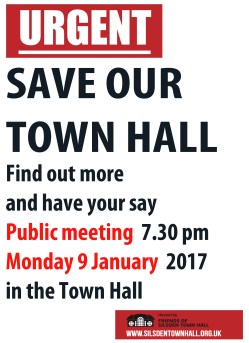
Below is a flyer I made for the town hall campaign in my town

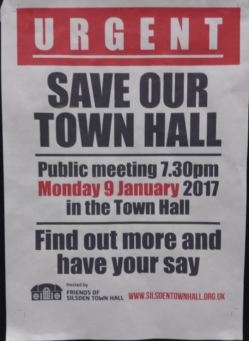
townhallposterflattenedThe chair of the group changed it to this
townhallposter2.png


why did he change it?

as an actor in a social group?

a social group with a common interest alongside their individual alignments and differences and egos

why did he change it as a human with a set of aesthetic knowledges? scripts? what else?

townhallposter2.pngwhat happened here?